I moved the S2000 dash preview towards something I could use as a bench tool, rather than just a picture of the cluster.
This pass corrected the readout proportions and shared warning artwork, then grouped the face, scenario and playback controls around the display. Telemetry is readable without opening a JSON dump, and the raw JSON is still available when I need it. Light, dark and system appearance settings persist between visits.1
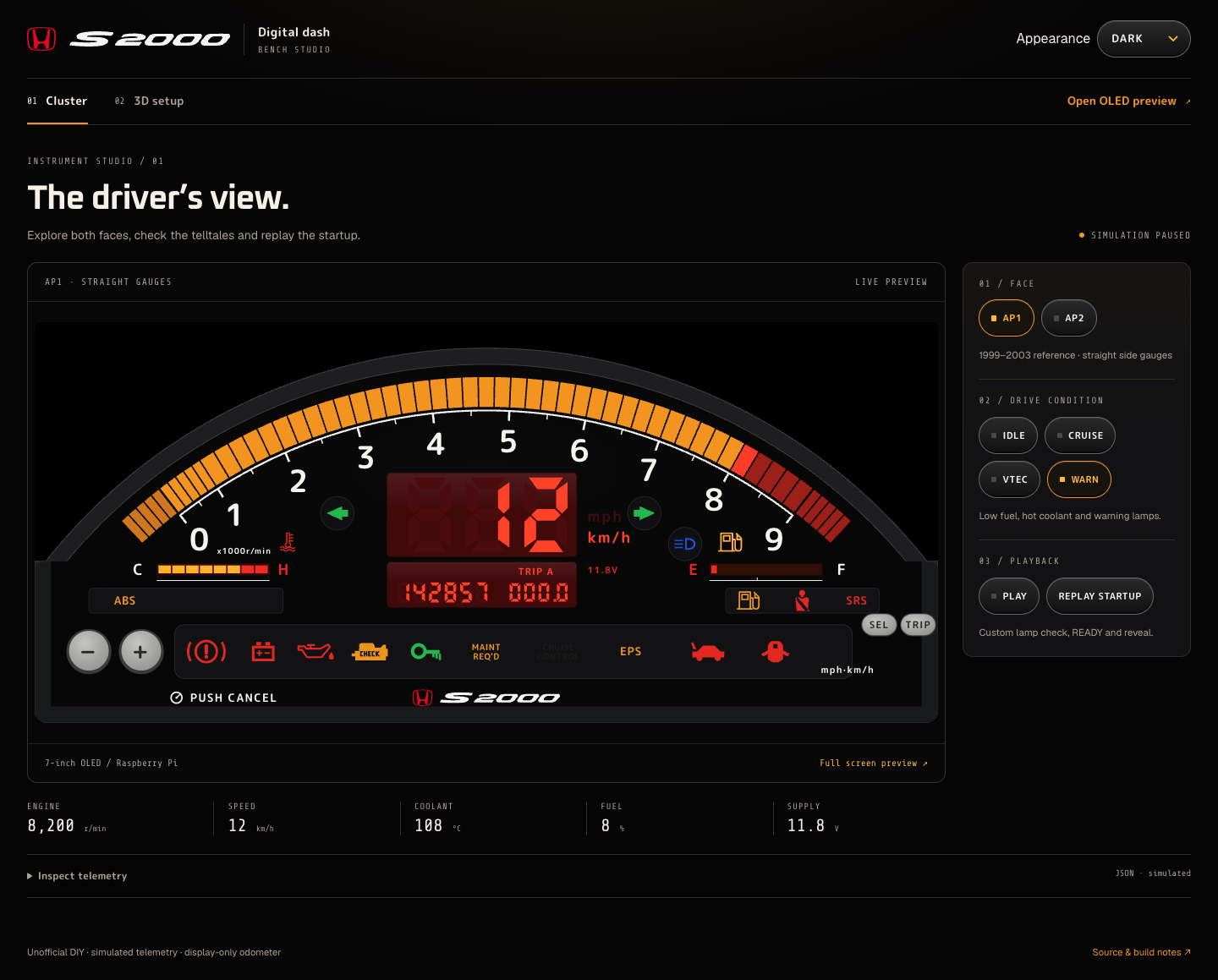
The bench studio's AP1 preview with simulated telemetry and warning controls.
The separate display route hides the web controls and uses mock telemetry, so the cluster can be previewed fullscreen on the Pi. It is a preview, not a claim that the live car integration is finished.
Looking at the physical setup
I also added a 3D workspace for inspecting and downloading the OLED/Pi enclosure prototype. That puts the face design and its housing next to each other in the workflow, instead of treating the enclosure as something to work out afterwards.
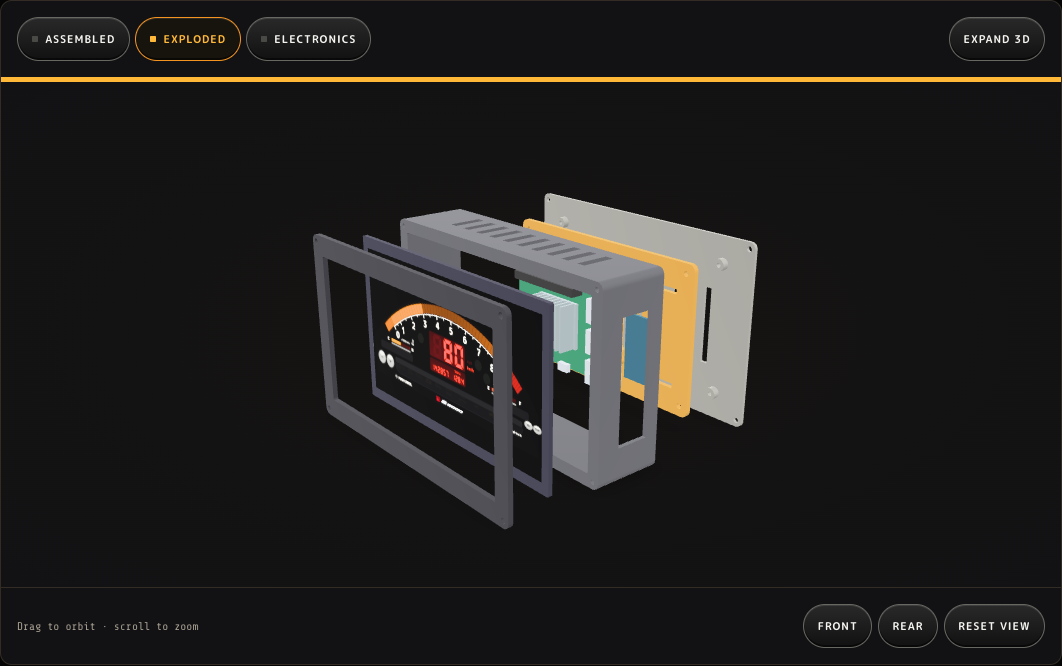
Exploded CAD view of the OLED and Raspberry Pi enclosure prototype.
There is still an important physical unknown: the exact panel model, native resolution and active area need recording. The target is a seven-inch OLED and Raspberry Pi for the AP1, but the downloadable geometry is not evidence of a measured fit in the car.
That boundary matters. The studio makes the design easier to inspect and iterate; the hardware measurements still have to decide what gets built.