Technical proficiency is the baseline. The attributes that separate good engineers from great ones are harder to interview for and easier to ignore.
Most hiring processes overweight technical skills because they're measurable. Whiteboard problems. Take-home assignments. System design interviews. These filter for coding ability. They don't filter for rally capacity, communication, or learning agility - the attributes that determine whether someone elevates a team or merely fills a seat.
Rally Capacity: The Critical Differentiator
The ability to rally teams and make things happen is perhaps the most important attribute that standard interviews miss.
Great engineers demonstrate maturity in taking ownership, coordinating across team boundaries, and driving initiatives to completion without constant oversight. This "rally capacity" manifests as:
- Taking initiative without being prompted
- Coordinating effectively across specialised teams
- Maintaining momentum despite organisational friction
- Creating clarity in ambiguous situations
The Netflix example: one engineer successfully coordinated approximately twenty engineers from different teams to reverse the Black Mirror season order. This wasn't a technical challenge. It was an organisational one. The engineer had to persuade, coordinate, and drive action across teams with different priorities and no direct reporting relationship.
Rally capacity often matters more than pure technical expertise in complex organisational environments. The best code in the world doesn't ship if the person who wrote it can't convince the infrastructure team to deploy it.
Communication and Persuasion
Beyond coding, great engineers excel at:
- Translating complex technical concepts for different audience levels
- Articulating the reasoning behind technical decisions
- Building consensus across teams with different priorities
- Using data and examples to support technical positions
Technical Expertise → Clear Explanation → Persuasive Reasoning → Stakeholder Buy-in → Successful Implementation
What distinguishes truly great engineers is their ability to communicate not just what should be done, but why it matters and how it fits into the larger technical and business context. An engineer who can explain to a product manager why a refactor is worth three sprints of delayed features is more valuable than one who can implement the refactor but can't justify it.
Learning Agility
Tools and stacks change constantly. The relevant comparison isn't current skills. It's speed of skill acquisition.
| Attribute | Good Engineers | Great Engineers |
|---|---|---|
| Skill acquisition | Learn when required | Proactively expand skillset |
| Domain flexibility | Comfortable in specific areas | Move fluidly between domains |
| Learning approach | Follow established patterns | Synthesise from diverse sources |
| Technology stance | Mastery of current tools | Openness to better approaches |
Great engineers willingly move between UI development, library creation, build systems, memory management, and entirely new technologies when necessary. They view each transition as an opportunity rather than a burden. The engineer who complains about having to learn a new framework is usually the same engineer who was complaining about the current framework two years ago.
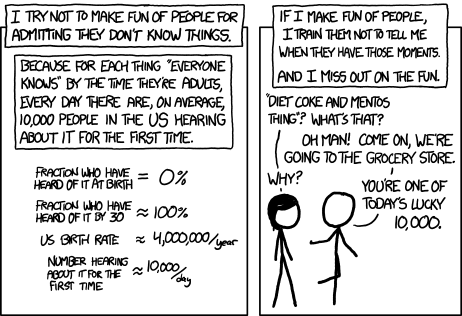
Ten Thousand by Randall Munroe, CC BY-NC 2.5, via xkcd.
Collaborative Mindset
Exceptional engineers value collaboration not just for project completion, but as a continuous learning opportunity.
Great engineers "mine the wisdom" even from junior colleagues, recognising that valuable approaches and insights can come from any team member regardless of experience level. This mindset:
- Accelerates team-wide skill development
- Prevents knowledge silos and single points of failure
- Creates psychological safety for innovation
- Builds stronger collective problem-solving capabilities
The inverse is equally telling: engineers who hoard knowledge, dismiss junior perspectives, or view collaboration as overhead are defining their own ceiling.
Organisational Fit
Even the most talented engineers are significantly influenced by organisational environment.
Engineers who thrive on action and impact can become deeply demotivated by excessive bureaucracy and slow decision-making. The fit factors:
- Decision velocity: Multiple approval layers for minor changes directly impact motivation
- Agency and ownership: Engineers need clear authority to improve areas they're responsible for
- Visible impact: The ability to see tangible outcomes from their work
- Process vs progress: Organisations that emphasise process adherence over delivery create friction
Companies that provide freedom and agency - allowing engineers to take ownership and drive projects forward with minimal bureaucratic friction - attract and retain exceptional talent. The engineers who leave aren't always leaving for more money. Often they're leaving for more agency.
How to Interview for It
Technical screening remains important. But dedicated evaluation of non-technical capabilities is essential:
- For rally capacity: "Tell me about a time you had to coordinate across multiple teams to deliver something. What was the obstacle? How did you persuade people? What would you do differently?"
- For communication: "Explain a technical decision you made to someone without a technical background." Or: "Walk me through a complex system you built, but start with why it mattered to the business."
- For learning agility: "Tell me about a technology you learned recently. Why did you choose it? What surprised you?"
- For collaborative mindset: "Tell me about a time a junior colleague taught you something." The engineers who can't answer this usually aren't the great ones.
Creating the Environment
Selecting great engineers is half the battle. The other half is creating an environment where they can actually be great.
Minimise bureaucratic friction. Streamline approval processes for low-risk changes. Create clear decision-making frameworks. Push authority to appropriate technical levels.
Foster learning culture. Create structured knowledge-sharing opportunities. Recognise and reward teaching and mentoring. Encourage cross-domain exploration.
Balance structure and autonomy. Provide clear objectives without prescriptive methods. Create guardrails rather than detailed processes. Allow space for technical creativity within strategic boundaries.
Engineering leaders should focus on removing obstacles and creating an environment where great engineers can leverage their rally capacity and technical skills without unnecessary friction.
Summary
- Technical skills are a baseline. Rally capacity, communication, and learning agility differentiate great from good.
- Rally capacity matters most in complex organisations. The ability to coordinate across boundaries often trumps individual technical depth.
- Communication is persuasion, not explanation. Great engineers build consensus, not just describe solutions.
- Learning agility > current skills. The landscape changes. Speed of adaptation determines long-term value.
- Organisational fit is multiplicative. Great engineers in bad environments produce less than good engineers in great environments.
- Interview for behaviours, not just algorithms. Ask about coordination, persuasion, learning, and collaboration.
What's Next
Audit your current hiring process. What percentage of interview time evaluates non-technical capabilities? If it's less than 30%, you're probably hiring good engineers and wondering why you don't have great ones.
The fix isn't harder algorithm questions. It's different questions entirely.